

Flood Damage Restoration in Charleston, SC
Charleston's low-lying terrain and seasonal heavy rainfall create persistent flood risk for homes throughout the area, from historic properties in South of Broad to newer developments in West Ashley and James Island. When water enters a home, fast action limits structural damage and prevents secondary problems, making flood damage restoration a time-sensitive priority. Nelson Water Damage Restoration connects Charleston property owners with independent local restoration providers who can begin work quickly, helping protect your home's value and safety.
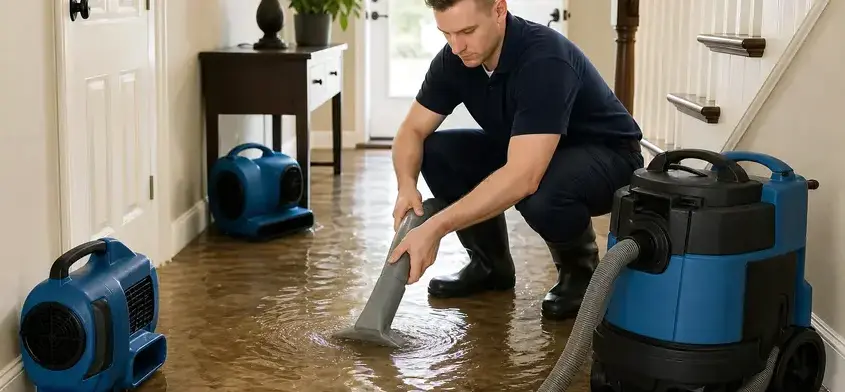
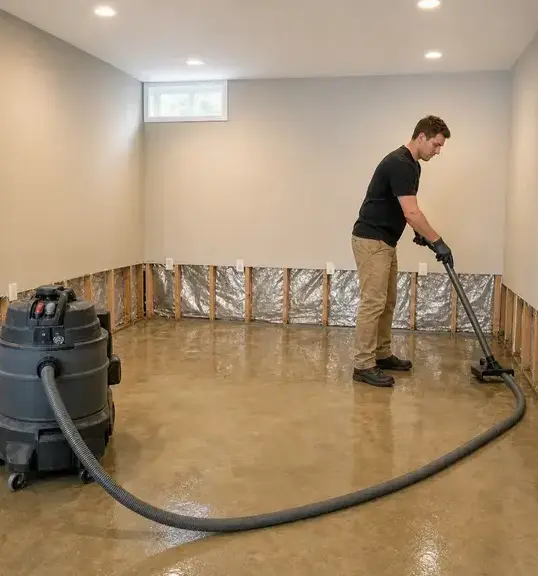
Flood Damage Restoration Services for Charleston Homes
Charleston's unique geography—with its low-lying terrain and high water table—creates ongoing exposure to water intrusion that threatens properties across the region. Heavy seasonal rainfall frequently leads to localized flooding, and the combination of saturated soil conditions and elevated groundwater means that many homes in Charleston face persistent moisture challenges. Whether water enters through foundation seepage, overwhelms drainage systems during intense storms, or accumulates in crawl spaces and slab foundations, the damage can spread quickly through structural materials, insulation, and finishes. Property owners in neighborhoods like South of Broad and James Island know that standing water and dampness are not minor inconveniences—they demand immediate, thorough Flood Damage Restoration to prevent lasting structural and safety problems.
Nelson Water Damage Restoration connects Charleston property owners with independent local providers who specialize in Flood Damage Restoration and understand the region's specific water challenges. When flooding occurs, time is critical; the network helps you reach qualified restoration professionals who arrive promptly to extract standing water, assess damage to foundations and framing, begin drying affected areas, and document losses for insurance purposes. Rather than piecing together vendors on your own, this referral service streamlines the process, putting you in touch with local providers ready to handle the full scope of Flood Damage Restoration work. Whether you're dealing with an active emergency or planning your recovery strategy, Nelson Water Damage Restoration ensures you connect with the right help fast.
Why Charleston Property Owners Choose Nelson Water Damage Restoration
Fast Response to Flood Damage
Flood Damage Restoration requires speed to prevent structural harm and mold growth. Nelson connects you to local providers ready to respond immediately when water intrusion occurs, minimizing time water sits in your home.
Clear Communication Throughout Restoration
Flood Damage Restoration involves multiple steps—extraction, drying, and remediation. Nelson-connected providers keep you informed at each stage, explaining what's happening and answering your questions so you understand the full scope of work.
Thorough Flood Damage Restoration Process
Complete Flood Damage Restoration means addressing visible water and hidden moisture in walls, flooring, and structural cavities. Local providers in Nelson's network use systematic extraction and drying to address damage thoroughly, not just surface-level cleanup.
Restoration Built for Charleston's Water Risks
Charleston's combination of heavy seasonal rainfall and elevated water tables creates persistent flood risk, particularly in neighborhoods like West Ashley and James Island where water intrusion is common. Nelson connects you to providers experienced in Flood Damage Restoration tailored to the region's weather patterns and foundation types.
How Our Flood Damage Restoration Process Works
From your initial call to the final inspection, we provide a structured, professional, and efficient process to ensure your property is fully restored after Flood Damage Restoration.
Call for Immediate Flood Damage Assessment
Contact Nelson Water Damage Restoration to describe your flood damage and property location in Charleston. A local independent restoration provider will prioritize your call and arrange a rapid assessment to evaluate water intrusion, affected materials, and the scope of flood damage restoration needed.
Inspect & Document Flood Damage
The restoration provider inspects your property—including crawl spaces, slab foundations, or elevated structures common in the Charleston area—to identify standing water, saturated building materials, and secondary damage. Documentation guides the flood damage restoration plan and supports your insurance claim.
Execute Flood Damage Restoration & Drying
The provider removes standing water, extracts moisture from affected areas, and begins structural drying to halt further flood damage. Follow-up monitoring ensures the restoration process is complete and your property is returned to safe, dry condition.
Dealing with Flood Damage Restoration in Charleston? Get fast, professional help.
Call Now — (843) 396-1171Flood Damage Restoration Across Charleston's Neighborhoods
Charleston's unique geography shapes how water damage unfolds across different properties. Many homes throughout the area are built on crawl spaces or slab foundations, a construction choice driven by the region's high water table and low-lying terrain. Older historic properties, particularly in neighborhoods like South of Broad and the French Quarter, often rest on pier foundations—a design that offered elevation in an earlier era but still requires specialized attention when flooding occurs. Whether a home sits on a raised foundation or closer to grade level affects how water enters, how quickly it spreads, and what restoration steps the independent providers in our network will prioritize.
Heavy seasonal rainfall and the potential for localized flash flooding are significant concerns for Charleston-area property owners year-round. When water damage strikes—whether from prolonged rain, drainage failures, or weather events—the foundation type and age of construction directly influence restoration scope and urgency. Older homes with wood-frame crawl spaces face different drying challenges than slab-foundation properties, and both require prompt action to prevent secondary damage. Our referral service connects you with independent local restoration providers who understand how Charleston's varied building styles and water risks demand a tailored response to get your property dried and stabilized quickly.
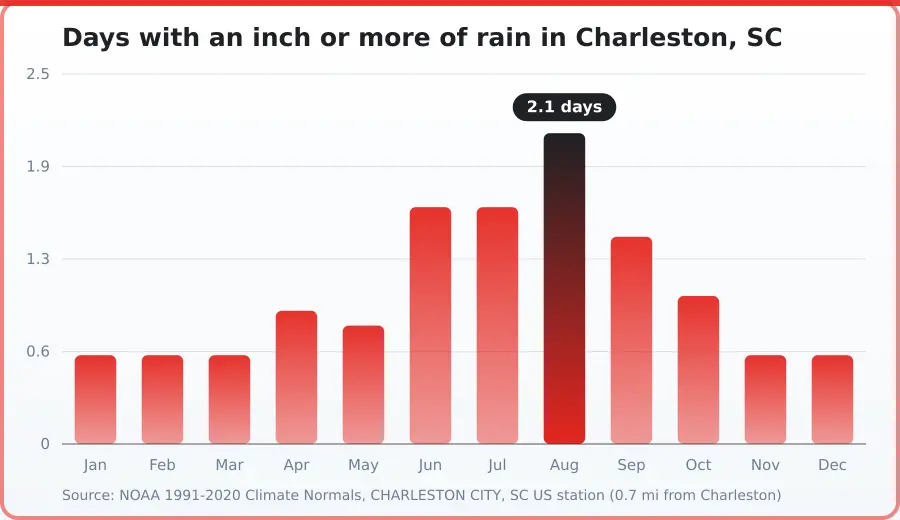
| Period | Days with an inch or more of rain (days) |
|---|---|
| Jan | 0.6 |
| Feb | 0.6 |
| Mar | 0.6 |
| Apr | 0.9 |
| May | 0.8 |
| Jun | 1.6 |
| Jul | 1.6 |
| Aug | 2.1 |
| Sep | 1.4 |
| Oct | 1 |
| Nov | 0.6 |
| Dec | 0.6 |
Source: NOAA 1991-2020 Climate Normals, CHARLESTON CITY, SC US station (0.7 mi from Charleston). Retrieved October 27, 2026.
Seasonal Flood Damage Restoration Needs in Charleston
Spring: Heavy Rainfall Response
Spring brings increased rainfall and thunderstorm activity to the Charleston region, raising flood damage risk across residential and commercial properties. When water intrusion occurs, Nelson Water Damage Restoration connects property owners with local restoration providers who respond quickly to extract standing water, assess structural damage, and begin the drying process before secondary damage spreads.
Summer: Moisture and Saturation
Summer's heat and humidity create persistent moisture conditions that intensify water damage challenges, particularly in properties where initial flood damage was incompletely addressed. Restoration providers in the Nelson network help property owners identify hidden moisture pockets within walls and foundations, using targeted drying and dehumidification to prevent long-term structural compromise and material degradation from prolonged saturation.
Fall: Rising Water Table Risks
Fall rainfall combines with Charleston's naturally high water table and low-lying terrain to elevate flood damage risk, especially in areas like James Island and West Ashley where homes rest on crawl spaces or slab foundations. Properties in these settings face increased water intrusion during seasonal downpours; Nelson Water Damage Restoration connects owners with local providers equipped to handle foundation-level water removal, moisture mitigation, and restoration tailored to the area's unique construction and drainage challenges.
Winter: Cold-Weather Complications
Winter freeze-thaw cycles can worsen existing water damage by expanding moisture trapped in walls, foundations, and materials, while occasional heavy winter rainfall directly triggers new flood events. Restoration providers accessible through Nelson Water Damage Restoration prioritize rapid water extraction and controlled drying during colder months to prevent ice formation and material cracking that amplifies repair costs and timeline.
Flood Damage Restoration FAQs — Charleston, SC
Flood damage restoration includes water removal, structural drying, cleaning, sanitization, and assessment of affected materials. Local providers handle everything from extracting standing water to drying walls, floors, and crawl spaces—common in Charleston homes due to the area's terrain. The goal is to remove moisture, prevent mold growth, and restore your property to safe, usable condition.
Nelson Water Damage Restoration works to connect you with local flood damage restoration providers in Charleston as fast as possible. Because flooding often requires immediate action to prevent secondary damage, we prioritize urgent requests. Contact us right away when water enters your home, and we'll link you with a nearby independent provider ready to respond.
Flood damage restoration costs depend on water volume, affected area size, material types, drying time, and structural complexity. Homes with crawl spaces or slab foundations may have different restoration needs. The independent provider you're connected with will assess your specific situation and explain pricing based on the scope of work required for your property.
Document damage with photos for insurance purposes, turn off electricity in flooded areas if safe to do so, and remove portable items from affected spaces when possible. Avoid walking through standing water if there's any risk of contamination. The restoration provider will guide you on next steps—they'll coordinate utilities, access, and the restoration timeline once they arrive.
Maintain gutters and downspouts to direct rainfall away from your foundation, grade soil away from your home's perimeter, and seal cracks in foundation walls. Keep sump pumps and drainage systems in working order, especially before heavy rain seasons. While some water intrusion is common in low-lying areas, these steps reduce the likelihood and severity of flood damage.
Charleston's low-lying terrain and high water table make it vulnerable to flooding from heavy seasonal rainfall and tropical weather patterns. Risk peaks during late summer and fall months when intense rain events are most likely. Understanding your property's exposure helps you prepare—whether your home is in historic neighborhoods like South of Broad or in areas like James Island, early action after water entry minimizes restoration costs.
Homeowner Safety Toolkit
Verify Your Charleston, SC Water Damage Restoration Company
Before you hire anyone, use these independent national resources to confirm credentials, standards, and track record.
EPA
The federal government's own guidance on drying out a water-damaged home fast enough to keep mold from taking hold.
Mold Prevention GuideNADCA
Sets the industry standard for inspecting and cleaning HVAC systems after water damage, so contaminated ductwork doesn't spread moisture through the rest of the house.
Duct & Air StandardsBBB
Look up any restoration company's complaint history, customer reviews, and accreditation status — a free, independent check before you hire.
Check StandingDealing with Flood Damage Restoration in Charleston, SC? Call (843) 396-1171 for 24/7 help.
Call Now — (843) 396-1171Areas We Serve Near Charleston, South Carolina
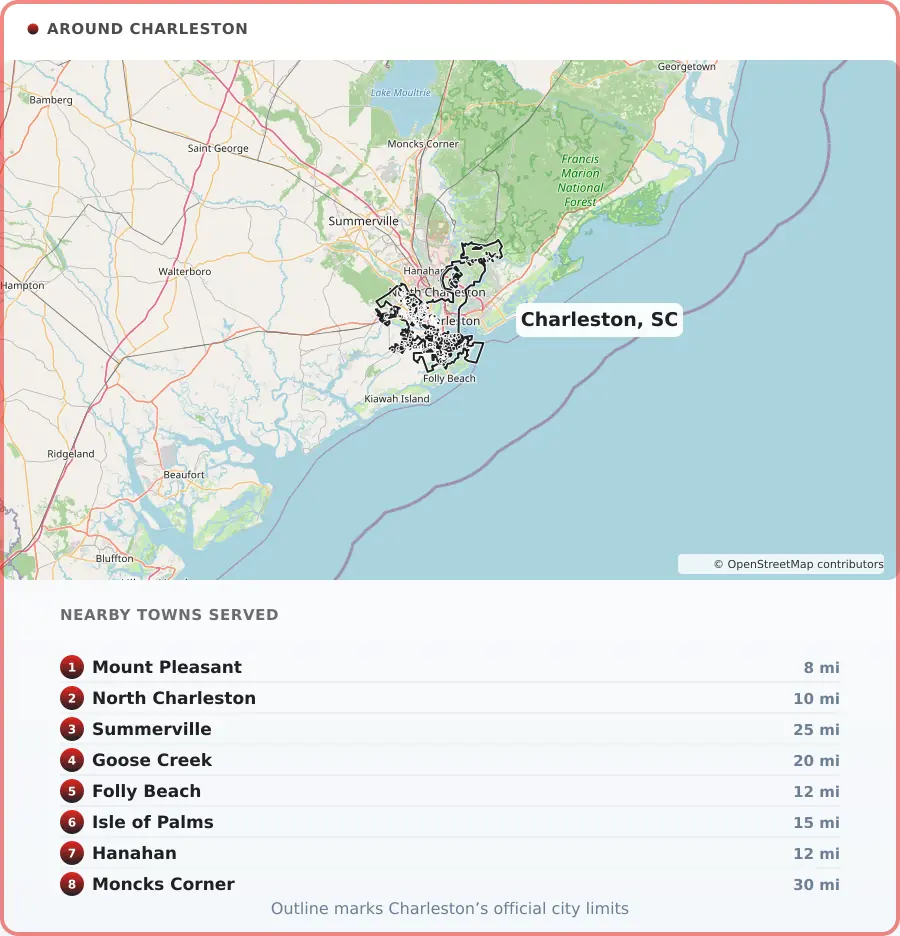
Charleston, SC is the centre of the service area, which extends to 8 surrounding towns. The map shows how far that reaches.
Charleston, SC Information
Charleston, SC sits where the Atlantic coastline folds into a web of rivers and harbors, giving the city its deep maritime character. That setting still drives the economy: the Port of Charleston keeps cargo and logistics moving, tourists fill the historic streets of South of Broad and the French Quarter, and Boeing's presence has helped build a serious aerospace and advanced manufacturing base alongside names like Bosch and Mercedes-Benz Vans.
About 150,000 people call the city home, supported by major institutions like MUSC and Joint Base Charleston, plus a growing tech scene that's earned Charleston the nickname 'Silicon Harbor.' It's a city that wears its history easily while still building something new along the water.
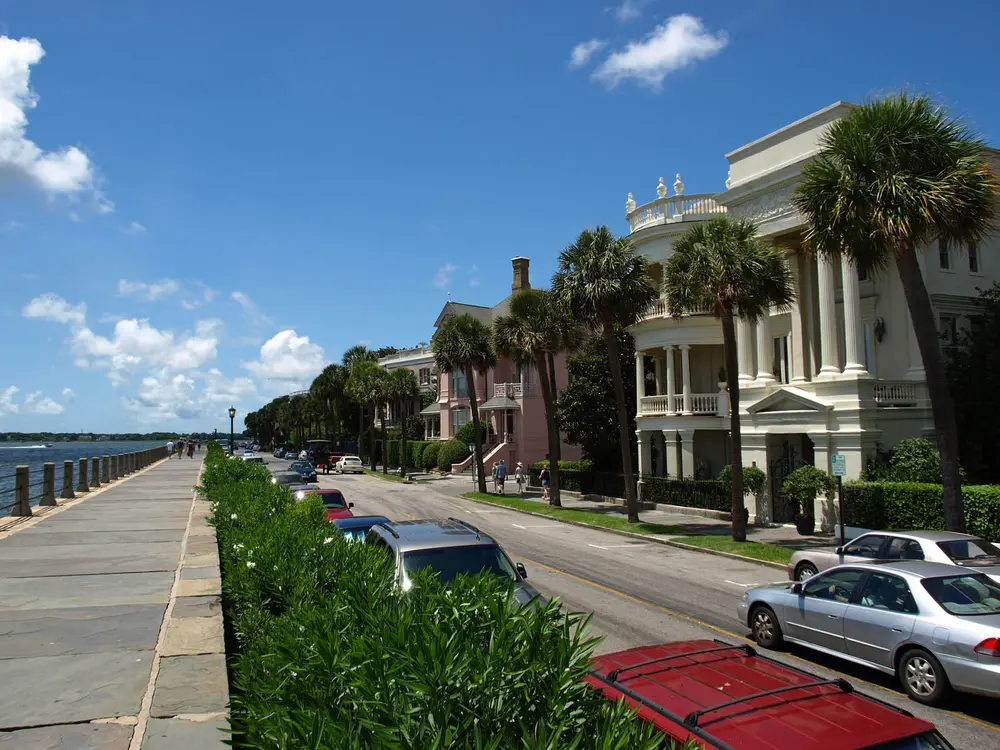
Photo: Chris Pruitt, CC BY-SA 3.0