

Winter Storm Damage in Charleston, SC
Charleston's low-lying terrain and high water table create conditions where heavy seasonal rainfall can overwhelm drainage systems and seep into foundations, causing water intrusion that demands swift action. Winter storms bring the risk of frozen pipes, ice dam leaks, and sudden thaws that can release significant water into homes throughout neighborhoods like James Island and West Ashley. Nelson Water Damage Restoration connects Charleston property owners with local restoration providers who respond quickly to winter storm water damage, helping minimize structural harm and the costly secondary effects that follow delayed treatment.
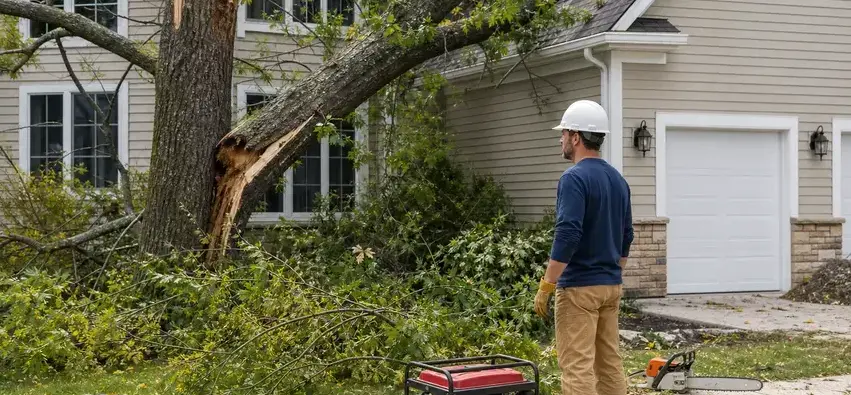
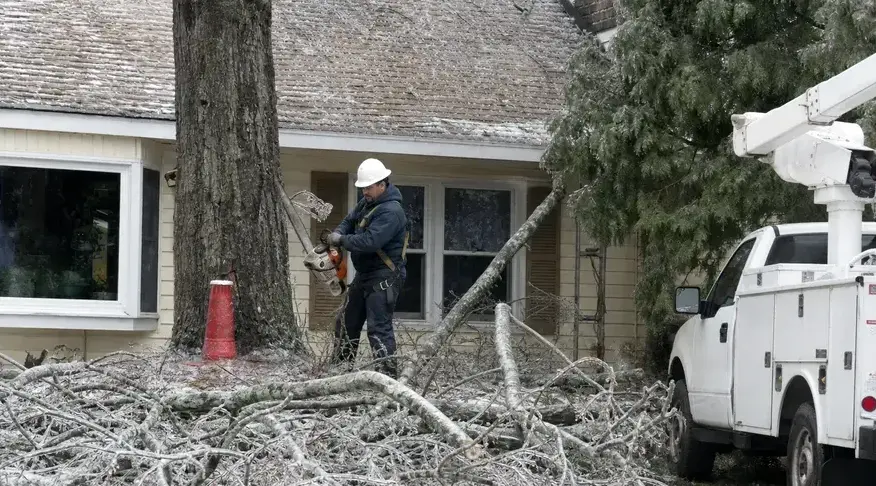
Winter Storm Damage in Charleston, SC
Charleston's unique geography—with many properties built on crawl spaces or slab foundations due to the region's high water table and low-lying coastal terrain, along with older historic homes elevated on piers—creates distinct vulnerabilities when winter storms arrive. Heavy seasonal rainfall combined with freeze-thaw cycles can overwhelm drainage systems, saturate foundations, and compromise structural integrity in ways that become apparent only after water has already infiltrated walls, crawl spaces, and living areas. Property owners across Charleston, from neighborhoods like South of Broad to West Ashley, face the genuine risk that a winter storm will leave standing water, moisture damage, and hidden water intrusion that can escalate quickly if not addressed immediately.
Nelson Water Damage Restoration connects Charleston property owners with independent local restoration providers who specialize in responding to winter storm damage with speed and thoroughness. When water enters your home or building, every hour matters—providers in the network move fast to locate all affected areas, remove standing water, begin the drying process, and document damage for insurance purposes. They handle not just visible flooding but also the moisture detection and follow-up monitoring that prevents mold and secondary damage from taking hold. If winter weather has already caused damage to your property, reach out today for a direct connection to a restoration provider ready to act.
Why Charleston Property Owners Trust Nelson for Winter Storm Damage
Fast Response to Winter Storm Damage
Winter storm damage demands immediate action. Nelson connects you with local restoration providers who prioritize rapid dispatch, minimizing water intrusion and secondary damage to your Charleston property.
Clear Communication Through Winter Storm Recovery
Understanding your winter storm damage situation reduces stress. Nelson's connected providers explain what happened, what's needed, and next steps in straightforward terms so you stay informed throughout restoration.
Thorough Winter Storm Damage Assessment
Winter storms cause damage that isn't always visible. The independent providers Nelson connects to conduct detailed inspections—identifying hidden moisture, structural concerns, and affected areas—to guide complete winter storm recovery.
Local Expertise for Charleston's Seasonal Rainfall Risks
Charleston's heavy seasonal rainfall and flash-flooding patterns create unique winter storm vulnerabilities, especially in homes built on crawl spaces or slab foundations typical of the low-lying coastal region. Nelson connects you with local restoration providers familiar with how these conditions affect properties in areas like South of Broad and West Ashley, enabling faster, better-informed damage response.
How Our Winter Storm Damage Process Works
From your initial call to the final inspection, we provide a structured, professional, and efficient process to ensure your property is fully restored after Winter Storm Damage.
Report Your Winter Storm Damage
Contact Nelson Water Damage Restoration to report winter storm damage to your Charleston property. We'll connect you with a local restoration provider who can respond quickly to assess water intrusion, ice damage, or flooding from heavy winter rainfall affecting your home.
Inspect & Document Winter Storm Impact
The local provider will inspect your property to identify winter storm damage—including water entering through roof leaks, frozen-pipe bursts, or standing water from seasonal rainfall. They'll document affected areas and determine the scope of restoration work needed for your foundation type and home structure.
Begin Winter Storm Water Restoration
The provider will start water extraction, drying, and cleanup to address winter storm damage and prevent secondary issues. They'll work with your insurance if needed and keep you informed throughout the restoration process until your Charleston home is secure.
Dealing with Winter Storm Damage in Charleston? Get fast, professional help.
Call Now — (843) 396-1171Winter Storm Damage Across Greater Charleston
Winter Storm Damage in Charleston affects properties across the region in different ways depending on their age and construction. Older historic homes, particularly those elevated on piers in neighborhoods like South of Broad and the French Quarter, face distinct vulnerabilities when ice, heavy snow, or freeze-thaw cycles damage roofing, gutters, and the structural supports beneath them. Newer construction and established residential areas throughout West Ashley and James Island, where many homes sit on crawl spaces or slab foundations due to the area's high water table and low-lying terrain, confront different challenges—frozen pipes, water intrusion into foundation areas, and ice damming that redirects meltwater into walls and foundations.
The seasonal freeze-thaw cycle and heavy rainfall that follows winter weather systems create compounded risks across all Charleston-area properties. Water that penetrates during a cold snap may not be immediately visible; it can pool in crawl spaces, saturate insulation, or work into structural cavities before thawing reveals the damage. Fast response to winter storm water damage is critical to prevent secondary issues like mold growth and structural decay. Nelson Water Damage Restoration connects Charleston property owners with local independent restoration providers who understand these region-specific risks and can assess damage quickly, whatever the age or foundation type of your home.
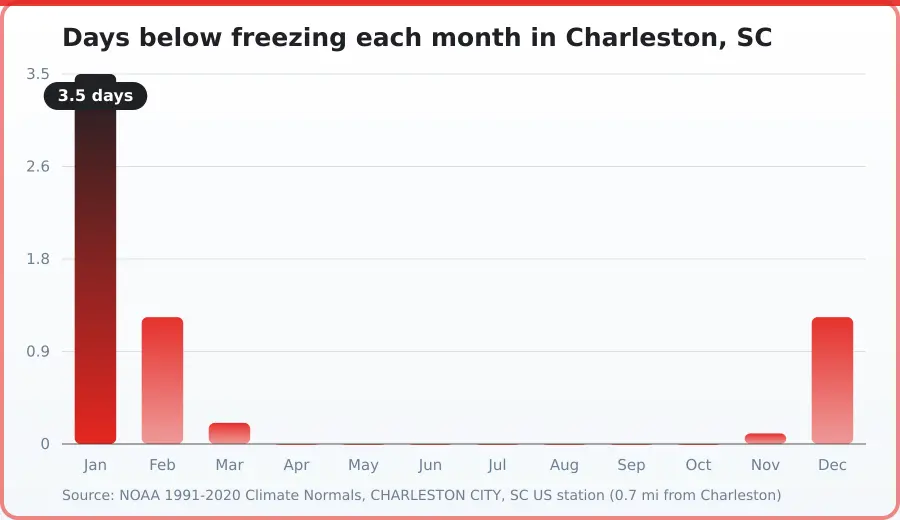
| Period | Freezing days per month (days) |
|---|---|
| Jan | 3.5 |
| Feb | 1.2 |
| Mar | 0.2 |
| Apr | 0 |
| May | 0 |
| Jun | 0 |
| Jul | 0 |
| Aug | 0 |
| Sep | 0 |
| Oct | 0 |
| Nov | 0.1 |
| Dec | 1.2 |
Source: NOAA 1991-2020 Climate Normals, CHARLESTON CITY, SC US station (0.7 mi from Charleston). Retrieved October 27, 2026.
Winter Storm Damage Across Charleston's Seasons
Spring: Thaw & Saturation
As temperatures rise and winter precipitation melts, Charleston-area properties face increased water infiltration from accumulated snowmelt and heavy spring rains. Nelson Water Damage Restoration connects you with local restoration providers who respond quickly to spring flooding and water intrusion, preventing secondary damage to structures and interiors.
Summer: Heat & Humidity
While summer brings intense heat and humidity, delayed moisture problems from earlier winter storms can accelerate mold and structural deterioration indoors. Nelson Water Damage Restoration helps property owners address lingering water damage before summer conditions worsen hidden dampness and compromise crawl spaces or slab foundations common to the area.
Fall: Seasonal Storm Risk
Fall transitions bring unpredictable weather patterns and increased rainfall that can reactivate or worsen unresolved winter storm damage. Nelson Water Damage Restoration connects Charleston residents with local providers who assess and repair water damage before the next heavy weather season arrives, protecting properties in neighborhoods like West Ashley and James Island.
Winter: Peak Storm Season
Winter delivers the season's heaviest rainfall and nor'easters that cause flooding, ice dam damage, and roof leaks in Charleston properties. Heavy seasonal rainfall can overwhelm drainage systems and expose vulnerabilities in foundations—especially critical in low-lying terrain where water intrusion poses ongoing structural risk. Nelson Water Damage Restoration connects you immediately with local restoration providers for emergency water extraction, drying, and damage assessment.
Related Services
Winter Storm Damage FAQs — Charleston, SC
Winter storm damage can include roof leaks from ice dams or heavy snow load, burst or frozen pipes that flood interior spaces, water infiltration through walls and foundations during freeze-thaw cycles, and damage to gutters and downspouts. Properties with crawl spaces or slab foundations are particularly vulnerable to water intrusion when heavy seasonal rainfall accompanies freezing temperatures. Prompt assessment is essential to prevent secondary issues like mold growth.
Nelson Water Damage Restoration connects Charleston property owners with independent local restoration providers who understand the region's winter weather patterns. When you contact the service, you're linked directly to nearby providers ready to respond to active water damage from winter storms. Fast local response is critical—the sooner restoration begins, the better the outcome for your property.
Restoration costs depend on the extent of water intrusion, which areas of your home are affected, how quickly the damage is addressed, and the specific restoration work needed. Damage to crawl spaces or slab foundations may involve different assessment and drying strategies than other parts of the home. The independent local providers you're connected with will evaluate your situation and discuss costs based on your property's unique needs.
Stop the source of water if it's safe to do so—shut off water if pipes are burst, or document ongoing leaks. Move valuables and personal items away from affected areas. Avoid electrical hazards in wet spaces. Then contact Nelson Water Damage Restoration to be connected with a local provider who can assess the damage and begin the restoration process before water spreads further into walls, floors, or foundations.
Regular maintenance helps—inspect and clean gutters and downspouts to direct water away from your foundation, seal cracks in exterior walls, insulate exposed pipes in vulnerable areas, and ensure proper grading around your home. For older historic homes or those with pier foundations common in the area, professional inspection before winter can identify weak points. These steps reduce—but don't eliminate—risk during severe winter weather and heavy rainfall events.
Winter in Charleston brings freeze-thaw cycles and heavy seasonal rainfall that create ideal conditions for water intrusion. Rapid temperature swings can cause pipes to burst, while prolonged cold snaps followed by warming can trigger ice dam leaks. Heavy winter rainfall on saturated ground puts pressure on foundations and crawl spaces. Properties should be inspected and prepared before winter arrives to minimize vulnerability during the season.
Homeowner Safety Toolkit
Verify Your Charleston, SC Water Damage Restoration Company
Before you hire anyone, use these independent national resources to confirm credentials, standards, and track record.
EPA
The federal government's own guidance on drying out a water-damaged home fast enough to keep mold from taking hold.
Mold Prevention GuideNADCA
Sets the industry standard for inspecting and cleaning HVAC systems after water damage, so contaminated ductwork doesn't spread moisture through the rest of the house.
Duct & Air StandardsBBB
Look up any restoration company's complaint history, customer reviews, and accreditation status — a free, independent check before you hire.
Check StandingDealing with Winter Storm Damage in Charleston, SC? Call (843) 396-1171 for 24/7 help.
Call Now — (843) 396-1171Areas We Serve Near Charleston, South Carolina
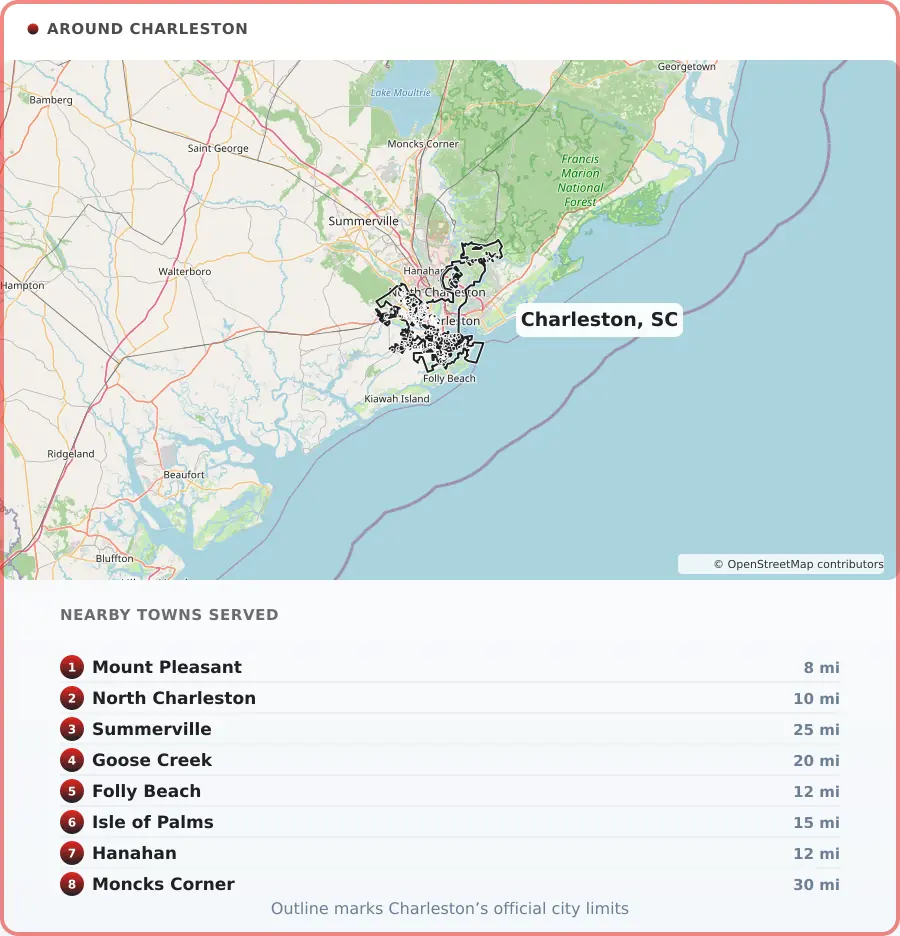
Charleston, SC is the centre of the service area, which extends to 8 surrounding towns. The map shows how far that reaches.
Charleston, SC Information
Charleston, SC sits where the Atlantic coastline folds into a web of rivers and harbors, giving the city its deep maritime character. That setting still drives the economy: the Port of Charleston keeps cargo and logistics moving, tourists fill the historic streets of South of Broad and the French Quarter, and Boeing's presence has helped build a serious aerospace and advanced manufacturing base alongside names like Bosch and Mercedes-Benz Vans.
About 150,000 people call the city home, supported by major institutions like MUSC and Joint Base Charleston, plus a growing tech scene that's earned Charleston the nickname 'Silicon Harbor.' It's a city that wears its history easily while still building something new along the water.
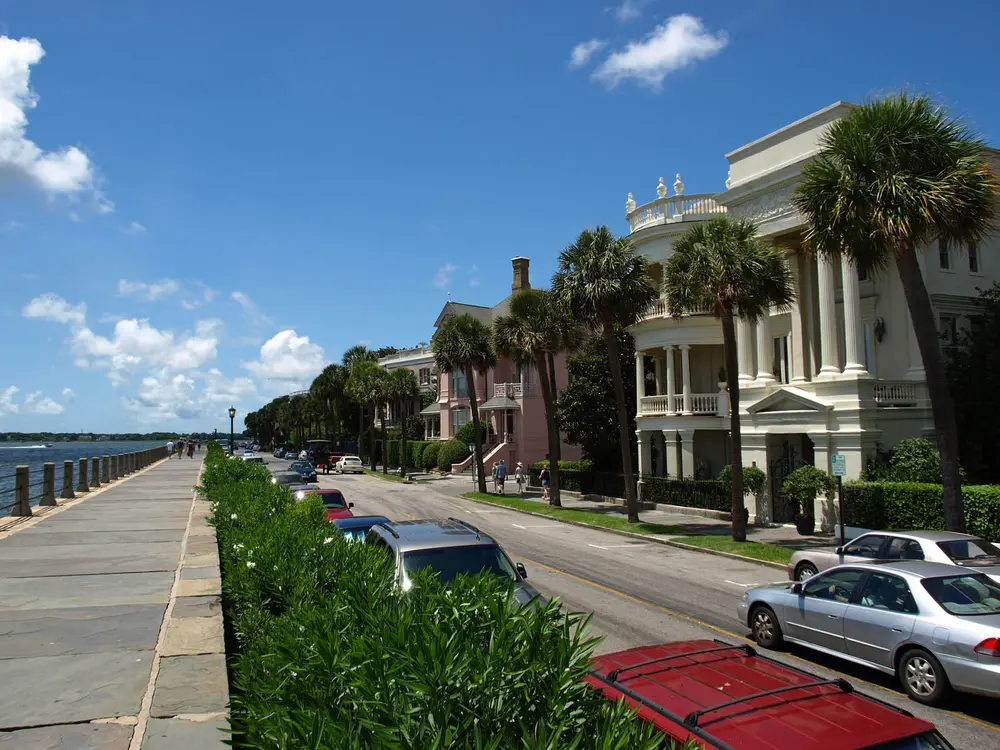
Photo: Chris Pruitt, CC BY-SA 3.0